Demand for high-speed internet at home or business continues to grow. FTTB (Fiber-to-the-Building or Fiber-to-the-Basement) network offers several benefits that empower cable and internet providers to meet this demand. This article provides a basic understanding of the FTTB network.
What is FTTB?
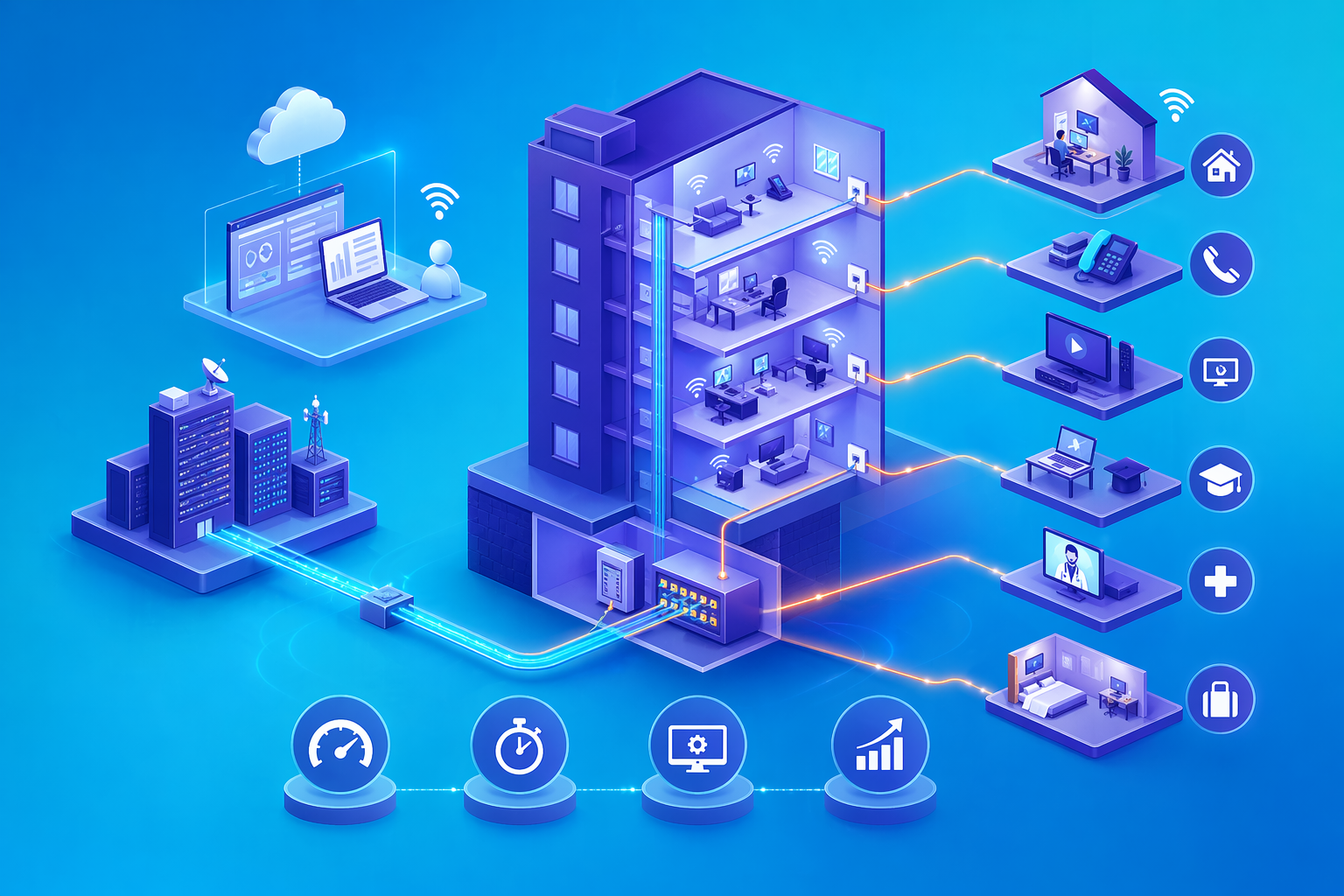
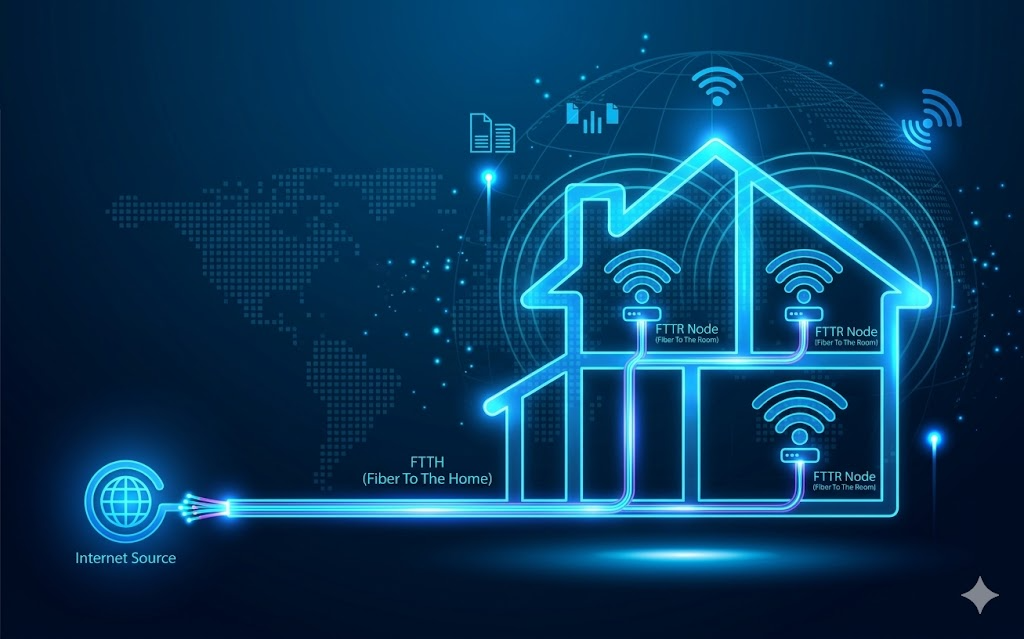
FTTB is a network connection mode of FTTx+LAN (Local Area Network). It mainly connects the optical signal to the main distribution box of the office building or apartment building to access the optical fiber signal. The interior of the apartment building is still using coaxial cable, twisted pair, or optical fiber to realize the signal distribution input in the application of high-speed data. In the FTTB network scenario, optical fibers are routed from a central office (CO ) to access devices that are located in buildings, such as in light-current wells or basements. Then, the access devices connect to copper (xDSL) or Cat 5 (LAN) cables at user homes.
What are the Benefits of Using FTTB Network? (Compared to traditional copper-based networks)
1) Line Access: FTTB uses dedicated line access without dial-up, and the installation is simple. The user only needs to install a network card on the computer for 24-hour high-speed Internet access. FTTB can provide speeds ranging from 10Mbps to 100Mbps or higher, depending on the service plan and network infrastructure (in modern deployments, speeds of 200Mbps–1Gbps are common).
2) Delay: Based on the IP speed limit, the delay will not increase even when running across the broadband.
3) Simple Network Management: Many network faults can be diagnosed and restored remotely or at the building's optoelectrical node, reducing the need for in-premise technician visits. However, faults occurring inside the subscriber's premises (e.g., indoor wiring or customer equipment) may still require on-site access.
4) Scalability: When there is a need to extend a network, telecom operators can, at any time, increase the bandwidth, speed, or latency performances of their FTTB network by extending the optical fiber over the last mile to reach the subscriber.
Applications
FTTB network is used in the home/office, VoIP, data, video, IPTV, education, telemedicine, hotel, etc.

Conclusion
Compared to traditional copper-based solutions (such as ADSL), FTTB delivers faster speeds, lower latency, and greater reliability by bringing fiber directly to the building — eliminating the performance degradation caused by long copper loops.
Sun Telecom specializes in providing one-stop total fiber optic solutions for all fiber optic application industries worldwide. Contact us if you have any needs.




 Position :
Home>
News & Tutorial
>Products
Position :
Home>
News & Tutorial
>Products








 ics@suntelecom.cn
  +86 18964888554
 Building No.145, Lane 666 Xianing Road, Jinshan Industrial Zone, Shanghai 201506, China




 +86 21 60138638


